

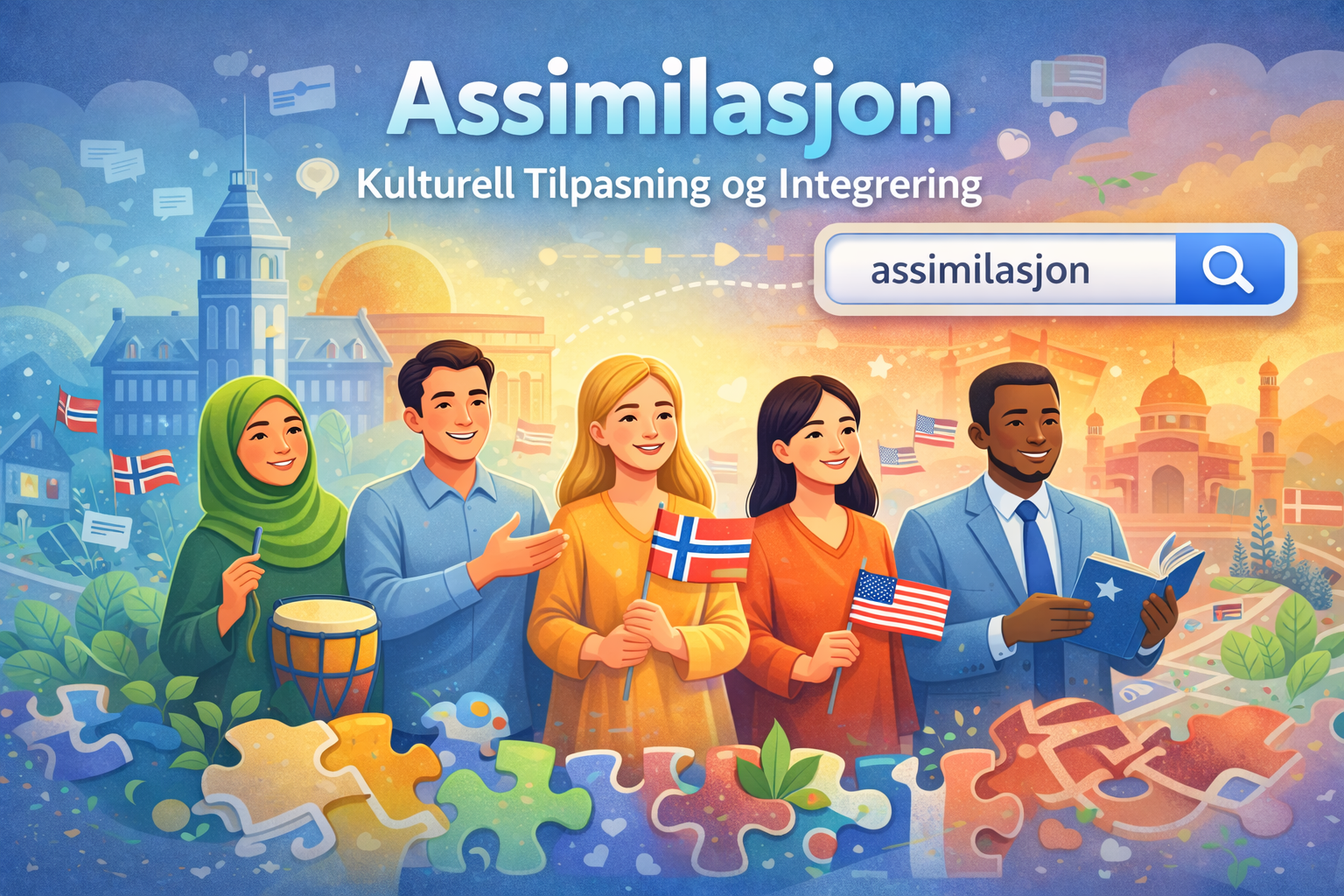
Assimilasjon is a powerful concept that plays a major role in sociology, culture, immigration, and social integration. In simple terms, assimilasjon refers to the process by which individuals or groups adopt the language, values, norms, and behaviors of a dominant society. This topic is widely discussed in education, migration studies, and social policy, making it a valuable keyword for attracting readers interested in social issues, culture, and globalization.
In this article, we’ll explore what assimilasjon means, how it works, real-life examples, its advantages and disadvantages, and how it differs from integration and multiculturalism.
What Is Assimilasjon?
Assimilasjon refers to the social and cultural process where a person or group gradually adopts the characteristics of the dominant culture in a society. Over time, differences in language, customs, traditions, and identity may become less visible.
In many countries, assimilasjon is discussed in relation to:
Immigration
Minority groups
Cultural identity
National values
Social cohesion
Assimilasjon can happen voluntarily, when people choose to adapt, or through social pressure, where individuals feel they must change to fit in.
Types of Assimilasjon
Assimilasjon is not a single process. It can take different forms depending on context:
1. Cultural Assimilasjon
This involves adopting cultural habits such as:
Language
Clothing styles
Food preferences
Social norms
Traditions
Example: Immigrants learning the local language and celebrating national holidays.
2. Structural Assimilasjon
This happens when individuals become part of major social institutions such as:
Schools
Workplaces
Political systems
Social organizations
Example: Participation in local politics or community organizations.
3. Social Assimilasjon
Social assimilasjon refers to forming close social relationships with members of the majority culture, such as friendships, marriages, and social networks.
4. Psychological Assimilasjon
This occurs when individuals begin to identify emotionally with the dominant culture and feel a strong sense of belonging.
Examples of Assimilasjon in Real Life
🌍 Immigration and Assimilasjon
One of the most common examples of assimilasjon occurs among immigrants. When people move to a new country, they often learn the language, follow social norms, and adapt to local customs to integrate into society.
For example:
Learning Norwegian when moving to Norway
Adopting local work culture
Understanding social rules and traditions
🏫 Assimilasjon in Education
Schools often play a role in assimilasjon by teaching:
National history
Language
Cultural values
Students from different backgrounds may gradually adopt the dominant culture through the education system.
🏙️ Urban Life and Social Assimilasjon
In cities, people from different cultural backgrounds interact daily. Over time, shared lifestyles, fashion, and communication styles can lead to cultural blending and partial assimilasjon.
Advantages of Assimilasjon
Assimilasjon can bring several benefits at both individual and societal levels:
✅ 1. Easier Communication
Learning the dominant language improves communication and access to education and employment.
✅ 2. Social Inclusion
Assimilasjon can help individuals feel more accepted and connected to society.
✅ 3. Economic Opportunities
People who adapt to social norms and workplace culture may find it easier to secure jobs and advance professionally.
✅ 4. Social Stability
From a societal perspective, assimilasjon can promote shared values and social cohesion.
Disadvantages and Criticism of Assimilasjon
Despite its benefits, assimilasjon is often criticized for several reasons:
❌ 1. Loss of Cultural Identity
Assimilasjon can lead to the erosion of original languages, traditions, and cultural heritage.
❌ 2. Pressure to Conform
Individuals may feel forced to abandon their identity to be accepted.
❌ 3. Inequality and Power Imbalance
Assimilasjon often assumes that one culture is dominant and others must adapt, which can create feelings of exclusion and marginalization.
❌ 4. Psychological Impact
The pressure to assimilate can cause stress, identity conflicts, and feelings of not belonging to either culture.
Assimilasjon vs Integrasjon vs Multikulturalisme
These three concepts are often confused, but they have important differences:
| Concept | Meaning |
| Assimilasjon | Minorities adapt to the dominant culture |
| Integrasjon | Different cultures coexist while participating equally in society |
| Multikulturalisme | Cultural diversity is actively recognized and preserved |
In many modern societies, integration and multiculturalism are increasingly promoted as alternatives to full assimilasjon, allowing people to maintain cultural identity while still participating fully in society.
Assimilasjon in Modern Society
In today’s globalized world, assimilasjon is more complex than ever. With social media, global travel, and multicultural cities, people often live with multiple identities rather than fully assimilating into a single culture.
Governments and institutions now face questions such as:
How much assimilasjon should be expected from immigrants?
Should cultural diversity be preserved or blended?
How can societies balance unity with diversity
Many countries now aim for inclusive integration, combining shared values with respect for cultural differences.
The Role of Language in Assimilasjon
Language plays a central role in assimilasjon. Learning the dominant language:
Improves access to education
Increases job opportunities
Strengthens social connections
Enhances civic participation
At the same time, preserving native languages is important for cultural heritage and identity. Bilingualism is increasingly seen as a strength rather than a barrier.
Assimilasjon and Identity
Identity is deeply connected to culture, language, and traditions. The process of assimilasjon can reshape how people see themselves. Some individuals embrace dual identities, while others may feel caught between cultures.
Modern identity is often:
Hybrid
Multicultural
Dynamic
This shows that assimilasjon today is not always about replacing one identity with another, but sometimes about blending multiple cultural influences.
Final Thoughts on Assimilasjon
Assimilasjon remains a key concept in understanding how societies change and how individuals adapt to new cultural environments. While it can promote social cohesion and opportunity, it also raises important questions about identity, diversity, and equality.
A balanced approach that respects cultural heritage while encouraging participation in shared social life can lead to healthier, more inclusive societies. As globalization continues, the conversation around assimilasjon will remain highly relevant for educators, policymakers, and communities worldwide.













Leave a Reply