
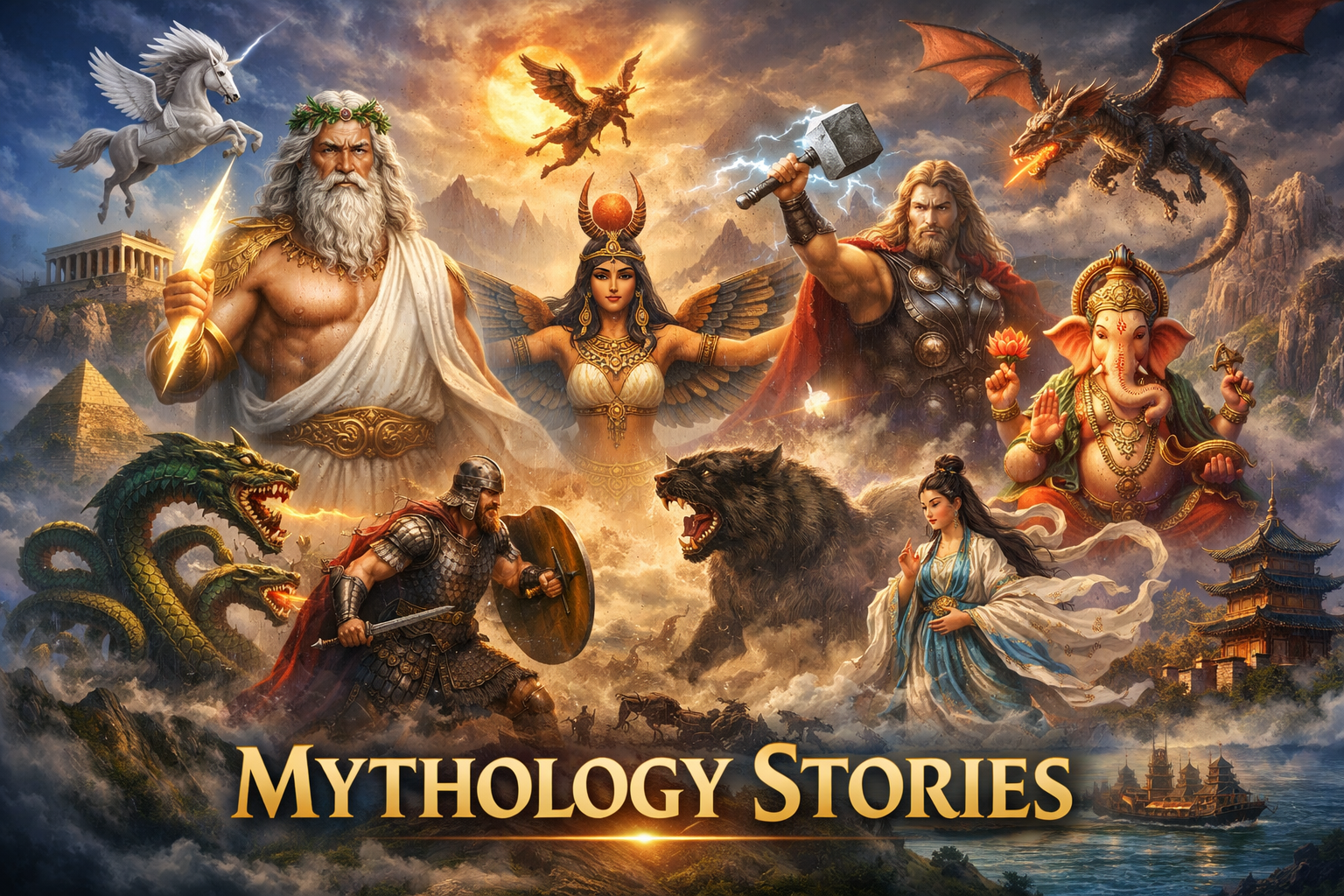
Mythology stories have fascinated humans since the beginning of civilization. Long before written history, people passed down tales of gods, heroes, monsters, and magical realms to explain the mysteries of life, nature, and the universe. Even today, mythology stories continue to influence books, movies, games, and popular culture across the globe.
In this article, we’ll explore what mythology stories are, why they still matter, different types of myths, and some of the most famous mythology stories from various cultures. If you’re interested in legends, ancient tales, or timeless storytelling, this guide will help you understand why mythology stories remain so powerful and relevant in the modern world.
What Are Mythology Stories?
Mythology stories are traditional tales that originate from ancient cultures and civilizations. These stories often explain natural events, cultural beliefs, religious ideas, and the origins of the world. They usually feature supernatural beings such as gods, goddesses, demons, spirits, and legendary heroes.
Unlike historical records, mythology stories are symbolic. They are not meant to be taken literally but rather as meaningful narratives that convey moral lessons, cultural values, and human emotions. For example, many mythology stories explain why the sun rises, how death came into the world, or why humans must struggle and work.
Over time, these stories were preserved through oral tradition and later written in sacred texts, poems, and epics. Today, they serve as cultural treasures and creative inspiration.
Why Mythology Stories Still Matter Today
Even in a world driven by science and technology, mythology stories continue to shape how we think, tell stories, and understand ourselves. Here’s why they remain important:
1. Cultural Identity
Mythology stories help preserve the traditions and values of different cultures. Greek, Norse, Egyptian, Hindu, Chinese, African, and Native American myths each reflect the unique worldview of the people who created them.
2. Life Lessons and Morals
Many mythology stories carry strong moral messages. Stories about heroes facing trials, gods punishing arrogance, or humans being rewarded for kindness teach timeless lessons about courage, humility, loyalty, and wisdom.
3. Inspiration for Modern Media
From superhero movies to fantasy novels and video games, mythology stories influence modern entertainment. Characters like Thor, Hercules, and Medusa are rooted in ancient myths but continue to capture new audiences.
4. Understanding Human Nature
Mythology stories explore love, jealousy, ambition, fear, and hope. Through gods and heroes, humans project their own struggles and desires, making these stories emotionally relatable even thousands of years later.
Types of Mythology Stories
Mythology stories can be grouped into different categories based on their purpose and themes:
1. Creation Myths
These stories explain how the world, humans, and nature came into existence.
Examples include stories about the birth of the universe, the creation of the first humans, or the origin of the sun and moon.
2. Hero Myths
Hero myths focus on legendary figures who go on epic journeys, face monsters, and perform great deeds.
These mythology stories often follow a hero’s growth, sacrifice, and triumph over evil.
3. God and Goddess Myths
These stories revolve around powerful divine beings who control elements of nature and human fate.
They explain how gods interact with humans, fight among themselves, and maintain balance in the universe.
4. Moral and Trickster Myths
Some mythology stories center on clever tricksters or moral lessons.
Trickster figures often use wit to outsmart stronger opponents, teaching lessons about intelligence, consequences, and human behavior.
5. Afterlife and Underworld Myths
These stories describe what happens after death.
Many cultures created mythology stories about heaven, hell, judgment, and the journey of the soul.
Famous Mythology Stories from Different Cultures
Greek Mythology Stories
Greek mythology is one of the most well-known sources of mythology stories.
Popular tales include the story of Zeus and the Olympian gods, the adventures of Hercules, and the tragic tale of Icarus, who flew too close to the sun. These stories explore themes of power, pride, love, and fate.
Norse Mythology Stories
Norse mythology stories come from ancient Scandinavia.
They include powerful gods like Odin, Thor, and Loki, as well as epic events like Ragnarok, the end of the world. These stories often emphasize bravery, destiny, and the harsh beauty of life.
Egyptian Mythology Stories
Ancient Egyptian mythology stories focus on life, death, and rebirth.
The story of Osiris, Isis, and Horus explains the cycle of death and resurrection and the idea of divine kingship. These myths reflect the Egyptians’ deep connection to the afterlife.
Hindu Mythology Stories
Hindu mythology stories are rich, complex, and deeply spiritual.
Epics like the Ramayana and the Mahabharata contain countless mythology stories about gods, demons, warriors, and divine incarnations. These stories teach values such as duty (dharma), devotion, and righteousness.
Chinese Mythology Stories
Chinese mythology stories often focus on balance, harmony, and cosmic order.
Stories about the Monkey King, the Jade Emperor, and the creation of the world show the importance of wisdom, discipline, and spiritual growth.
Common Themes in Mythology Stories
Across cultures, mythology stories share several common themes:
-
The battle between good and evil
-
The consequences of pride and greed
-
The power of love and sacrifice
-
The journey of self-discovery
-
The relationship between humans and the divine
These universal themes help explain why mythology stories resonate with people everywhere, regardless of background or time period.
How Mythology Stories Influence Modern Storytelling
Many modern stories follow patterns first seen in mythology stories. The “hero’s journey,” where a character leaves home, faces trials, and returns transformed, comes directly from ancient myths. Superheroes, fantasy epics, and even sci-fi narratives often mirror classic mythology stories.
For example, a modern hero facing a powerful villain reflects the same structure as ancient gods battling chaos or heroes slaying monsters. This connection makes mythology stories a foundation of storytelling itself.
Why People Love Reading Mythology Stories
People are drawn to mythology stories because they combine imagination, adventure, and deep meaning. These stories allow readers to escape into magical worlds while also reflecting real human struggles. Whether it’s a god dealing with jealousy or a hero facing impossible odds, mythology stories connect fantasy with emotional truth.
They also spark curiosity about ancient cultures, encouraging readers to learn about history, religion, and philosophy through engaging narratives.
Final Thoughts
Mythology stories are more than just old legends—they are timeless narratives that shape culture, imagination, and human understanding. From ancient temples to modern movies, these stories continue to evolve and inspire. By exploring mythology stories from around the world, we gain insight into how different cultures view life, death, love, and destiny.
If you’re looking to explore meaningful storytelling, creative inspiration, or ancient wisdom, mythology stories offer a powerful gateway into the shared imagination of humanity.











Leave a Reply