
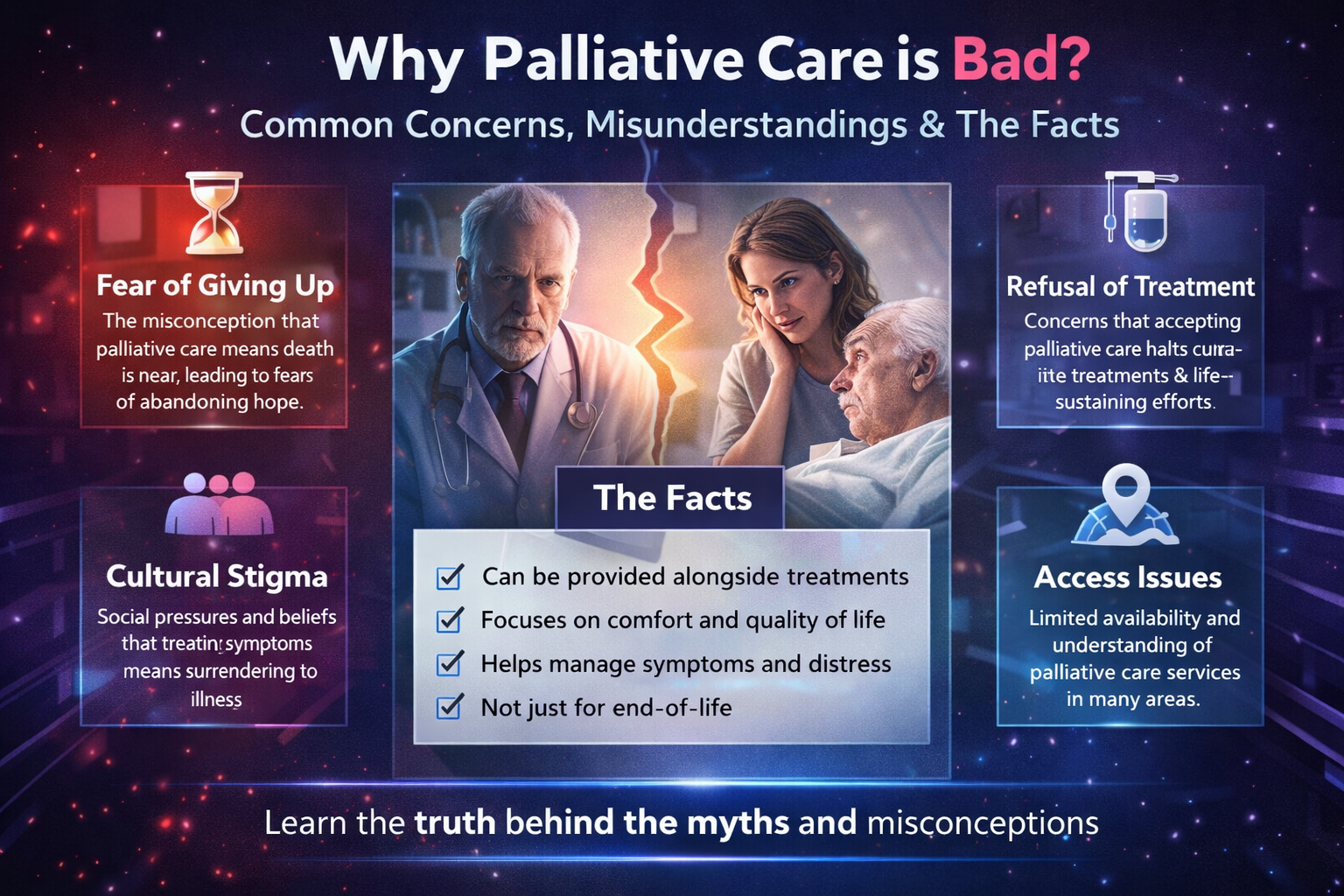
Many people type “why palliative care is bad” into Google during emotionally charged moments—often after a serious diagnosis, a hospital recommendation, or a difficult family discussion. The phrase reflects fear, confusion, and worry rather than settled opinion.
Common reasons people feel skeptical about palliative care include:
-
Believing it means “giving up”
-
Confusing it with hospice or end-of-life care
-
Fearing that treatment will stop
-
Worrying it accelerates death
This article explores why some people think palliative care is bad, the real problems people experience, and what palliative care actually is—so you can make informed decisions and separate myth from reality.
Why Some People Believe Palliative Care Is Bad
Let’s start with the real reasons this belief exists. These concerns are common and understandable.
1. Misunderstanding: “Palliative Care Means Death Is Near”
One of the biggest reasons people think palliative care is bad is the assumption that it only applies when death is imminent. Many families hear the word “palliative” and think:
“The doctors are giving up.”
In reality, palliative care can be provided at any stage of serious illness, alongside curative treatment. But poor communication from healthcare providers sometimes reinforces this fear.
Why this feels bad:
-
Patients feel abandoned
-
Families think hope is being taken away
-
The term becomes emotionally loaded
2. Fear That Treatment Will Stop
Another common belief behind the search “why palliative care is bad” is the fear that:
-
Chemotherapy will stop
-
Life-saving treatments will be withdrawn
-
Doctors will no longer fight for the patient
This fear often comes from confusing palliative care with hospice care. Hospice typically focuses on comfort near the end of life, while palliative care can be given alongside aggressive treatments.
Why this feels bad:
-
Families fear loss of control
-
Patients worry their life is being devalued
-
People equate comfort care with “no care”
3. Cultural and Social Stigma
In many cultures, accepting palliative care is seen as:
-
A sign of weakness
-
A lack of faith
-
Giving up on recovery
This social stigma fuels the idea that palliative care is bad, even when it may actually improve comfort, dignity, and mental health.
Why this feels bad:
-
Families feel judged
-
Patients feel guilty for wanting comfort
-
There is pressure to “fight at all costs”
4. Poor Experiences With the Healthcare System
Some people associate palliative care with negative experiences, such as:
-
Feeling rushed by doctors
-
Lack of emotional support
-
Poor communication
-
Inadequate pain management
When palliative care teams are understaffed or poorly introduced, patients may feel dismissed. This leads to the belief that palliative care is bad, when the real problem is how the care was delivered, not the concept itself.
Real Concerns and Limitations of Palliative Care
It’s also fair to acknowledge that palliative care is not perfect. Here are genuine issues people encounter:
1. Access Problems
Not everyone has access to high-quality palliative care. In many regions:
-
Services are limited
-
Specialists are unavailable
-
Insurance coverage is unclear
This can create uneven care experiences.
2. Communication Failures
Doctors sometimes introduce palliative care poorly, saying things like:
“There’s nothing more we can do.”
This framing makes patients feel hopeless, even though palliative care is about doing more to support quality of life, not doing less.
3. Emotional Readiness
Some patients simply are not emotionally ready to accept palliative care. Being told about it can feel like a loss of hope, even if medically it’s appropriate.
These challenges help explain why people think palliative care is bad, even when the intent of the care is compassionate.
What Palliative Care Actually Is
To understand why the idea that “palliative care is bad” persists, it helps to clarify what it truly involves.
Palliative care focuses on:
-
Pain management
-
Symptom control (nausea, fatigue, breathlessness)
-
Emotional support
-
Psychological care
-
Family support
-
Quality of life
It does not mean:
-
Stopping all treatment
-
Giving up on life
-
Accelerating death
Many patients receive palliative care while still undergoing surgery, chemotherapy, dialysis, or other life-prolonging treatments.
Why the “Palliative Care Is Bad” Narrative Can Be Harmful
Spreading the idea that palliative care is bad can have unintended consequences:
-
Patients delay comfort support
-
Pain and suffering increase unnecessarily
-
Families experience more distress
-
End-of-life discussions become more traumatic
Ironically, avoiding palliative care often leads to more suffering, not less.
Why People Search This Keyword (Search Intent)
From an SEO perspective, the keyword “why palliative care is bad” reflects:
-
Fear-based search intent
-
Emotional distress
-
Desire for reassurance
-
Confusion about medical decisions
If your site addresses this keyword with empathy and clarity, you can:
-
Capture high-intent traffic
-
Build trust
-
Become a reliable health information resource
How to Approach Palliative Care Conversations
If you or someone you love is considering palliative care, here are helpful questions to ask:
-
Can palliative care be provided alongside treatment?
-
What symptoms will be managed?
-
How will this improve quality of life?
-
Does this mean stopping other treatments?
-
What support is available for family members?
These questions empower patients and reduce the fear that leads people to think palliative care is bad.
Final Thoughts: Is Palliative Care Really Bad?
The belief that palliative care is bad usually comes from:
-
Fear
-
Misunderstanding
-
Poor communication
-
Emotional overwhelm
While palliative care has limitations and access challenges, it is fundamentally designed to reduce suffering, improve comfort, and support both patients and families. The problem is rarely the care itself—it’s how people are introduced to it and how the healthcare system communicates about it.
By addressing this keyword honestly and compassionately, your website can rank well in search engines while providing valuable, trustworthy information to people who are often scared and searching for clarity.













Leave a Reply