
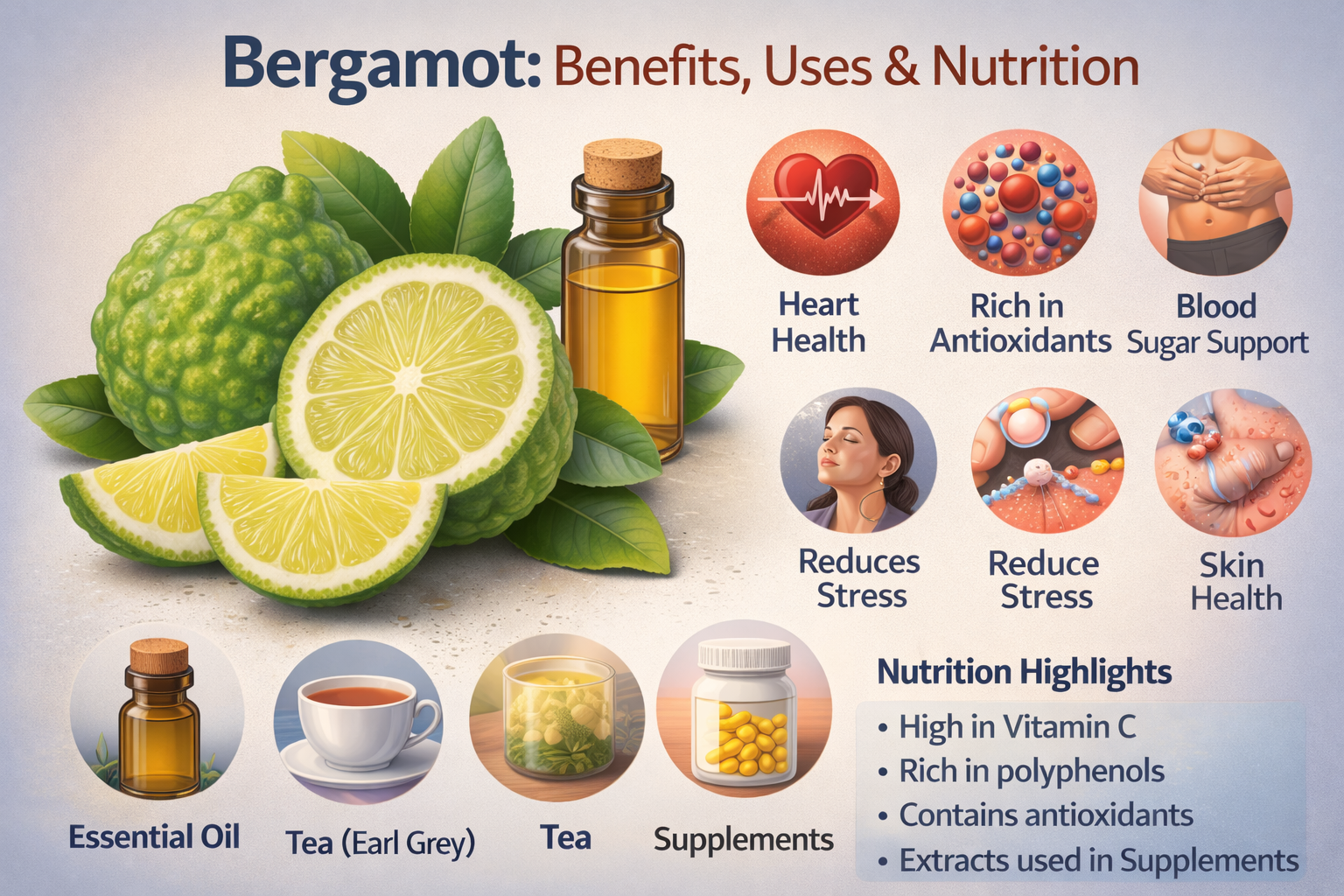
Bergamot is a unique citrus fruit best known for its fragrant oil and its role in Earl Grey tea. Beyond its distinctive aroma, bergamot offers a wide range of health benefits, medicinal uses, and culinary applications, making it increasingly popular in wellness, skincare, and natural health niches.
In this article, you’ll learn what bergamot is, its benefits, uses, nutritional value, side effects, and how to use it safely—all optimized to help you rank for the keyword bergamot and related search terms.
What Is Bergamot?
Bergamot (Citrus bergamia) is a citrus fruit roughly the size of an orange, with a yellow-green peel and a sharp, aromatic scent. It is primarily grown in southern Italy, especially in Calabria, where climate and soil conditions are ideal.
Unlike common citrus fruits, bergamot is rarely eaten fresh due to its bitter taste. Instead, it is valued for:
Bergamot essential oil
Flavoring teas and foods
Skincare and aromatherapy products
Nutraceutical and pharmaceutical uses
Nutritional Value of Bergamot
Bergamot contains a variety of beneficial compounds, including:
-
Vitamin C
-
Flavonoids (naringin, neohesperidin)
-
Polyphenols
-
Antioxidants
-
Essential oils (limonene, linalool, bergapten)
These compounds contribute to bergamot’s anti-inflammatory, antioxidant, and cholesterol-lowering properties.
Health Benefits of Bergamot
1. Supports Heart Health
One of the most researched benefits of bergamot is its ability to reduce cholesterol levels. Bergamot polyphenols may:
-
Lower LDL (bad cholesterol)
-
Increase HDL (good cholesterol)
-
Reduce triglycerides
This makes bergamot supplements popular among people managing cardiovascular health naturally.
2. Rich in Antioxidants
Bergamot is packed with antioxidants that help:
-
Neutralize free radicals
-
Reduce oxidative stress
-
Support cellular health
Antioxidants also play a role in slowing signs of aging and supporting immune function.
3. Helps Manage Blood Sugar Levels
Studies suggest bergamot may help:
Improve insulin sensitivity
Reduce blood glucose spikes
Support metabolic health
This makes it potentially useful for people with prediabetes or metabolic syndrome.
4. Promotes Digestive Health
Traditionally, bergamot has been used to:
Aid digestion
Reduce bloating
Support gut function
Bergamot essential oil may stimulate digestive enzymes and reduce inflammation in the digestive tract.
5. Reduces Stress and Anxiety
In aromatherapy, bergamot is widely used for its calming and mood-enhancing effects. Inhaling bergamot oil may:
Reduce anxietyImprove moodLower cortisol levelsPromote relaxation
This makes bergamot popular in massage oils, diffusers, and wellness therapies.
6. Supports Skin Health
Bergamot is commonly found in skincare due to its:
-
Antibacterial properties
-
Oil-balancing effects
-
Refreshing scent
It may help with acne-prone skin when used correctly and diluted properly.
Uses of Bergamot
1. Bergamot Essential Oil
Bergamot essential oil is extracted from the fruit peel and is widely used in:
AromatherapyPerfumes and colognesMassage therapySkincare products
Its scent is fresh, citrusy, and slightly floral.
2. Bergamot in Tea (Earl Grey)
The most famous use of bergamot is in Earl Grey tea, where bergamot oil gives the tea its signature aroma and flavor.
Benefits of bergamot tea include:
Improved digestionMild energy boostAntioxidant support
3. Culinary Uses
Bergamot is used in:
MarmaladesCandiesPastriesLiqueursGourmet sauces
Chefs value bergamot for its complex citrus flavor.
4. Supplements
Bergamot extract supplements are commonly used for:
Cholesterol managementMetabolic health
Antioxidant support
Always choose standardized extracts from reputable brands.
How to Use Bergamot Safely
While bergamot offers many benefits, it must be used correctly.
Essential Oil Safety
Always dilute before applying to skin
Avoid sun exposure after topical use (bergamot can be photosensitive)
Use steam-distilled or bergapten-free oil for skincare
Supplement Precautions
Consult a healthcare provider before use
Avoid combining with cholesterol medications without guidance
Not recommended during pregnancy unless approved by a doctor
Possible Side Effects of Bergamot
Although generally safe, bergamot may cause:
Skin irritation (if undiluted)PhotosensitivityDrug interactionsStomach discomfort (in high doses)
Moderation and proper use are key.
Bergamot vs Other Citrus Fruits
Unlike oranges or lemons, bergamot stands out due to:
Higher polyphenol content
Stronger medicinal properties
Limited raw consumption
Extensive use in oils and supplements
Its unique chemical profile makes it especially valuable in wellness applications.
Frequently Asked Questions About Bergamot
Is bergamot the same as orange?
No. Bergamot is a distinct citrus species with different properties and uses.
Can you eat bergamot fruit?
It can be eaten, but its bitter taste makes it unpopular for raw consumption.
Is bergamot good for weight loss?
Bergamot may support metabolism and lipid balance, which can indirectly help weight management.
Is bergamot safe daily?
Yes, when used appropriately and within recommended limits.
Final Thoughts
Bergamot is far more than a fragrant citrus fruit. With proven benefits for heart health, metabolism, mental well-being, and skincare, it has earned its place in modern wellness and traditional medicine alike.
Whether consumed as tea, used as an essential oil, or taken as a supplement, bergamot offers a powerful combination of flavor, fragrance, and health benefits. When used responsibly, it can be a valuable addition to a healthy lifestyle.














Leave a Reply